
Getting Court Records in Indiana
MyCase is Indiana's statewide case search. It can find a public case. It can also show selected documents from courts on the Odyssey system. An official access matrix spells out which case types and users may view documents online. Still, MyCase is not the official file. Not every pleading gets linked there. Most Indiana county Circuit, Superior, and Probate records sit with the local Clerk of the Circuit Court. City or town cases may rest with a local court clerk. When a paper is missing, a file is old, or you need a certified copy, go through the county clerk.
- Search Indiana MyCase by case number, party, or attorney. Record the Indiana court and case number shown in the result.
- Check the Indiana county court’s online docket or record-request page for linked papers, local forms, and submission methods. Reach the right clerk through the Indiana county directory.
- At an Indiana courthouse counter, ask the clerk to inspect the public file or use the public terminal if one is available. Give the case number, party name, and document or CCS event sought.
- For mail, email, or an online request form, follow the Indiana clerk’s instructions for document description, payment, and return delivery. Phone the local court to ask who holds the record and whether it can be retrieved.
- If MyCase has no PDF, ask the Indiana record-holding clerk whether the document is public and available through a local inspection or copy request. Choose a certified copy only when an authenticated clerk record is needed.
Two things control access to Indiana court records. One is the Indiana Rules on Access to Court Records. The other is each court's local procedures. The Indiana Access to Public Records Act (APRA) defers to the Indiana Supreme Court on court-record access, so an agency request deadline is not a promised production date from a county court. Indiana also has no single statewide form, phone queue, walk-in schedule, mailing method, ID rule, or response-time guarantee for county files. Call the local clerk before you visit or mail a payment. The Indiana Judicial Branch's public-record request guidance sorts county court files, appellate records, transcripts, and Office of Judicial Administration records by the office that holds each one.
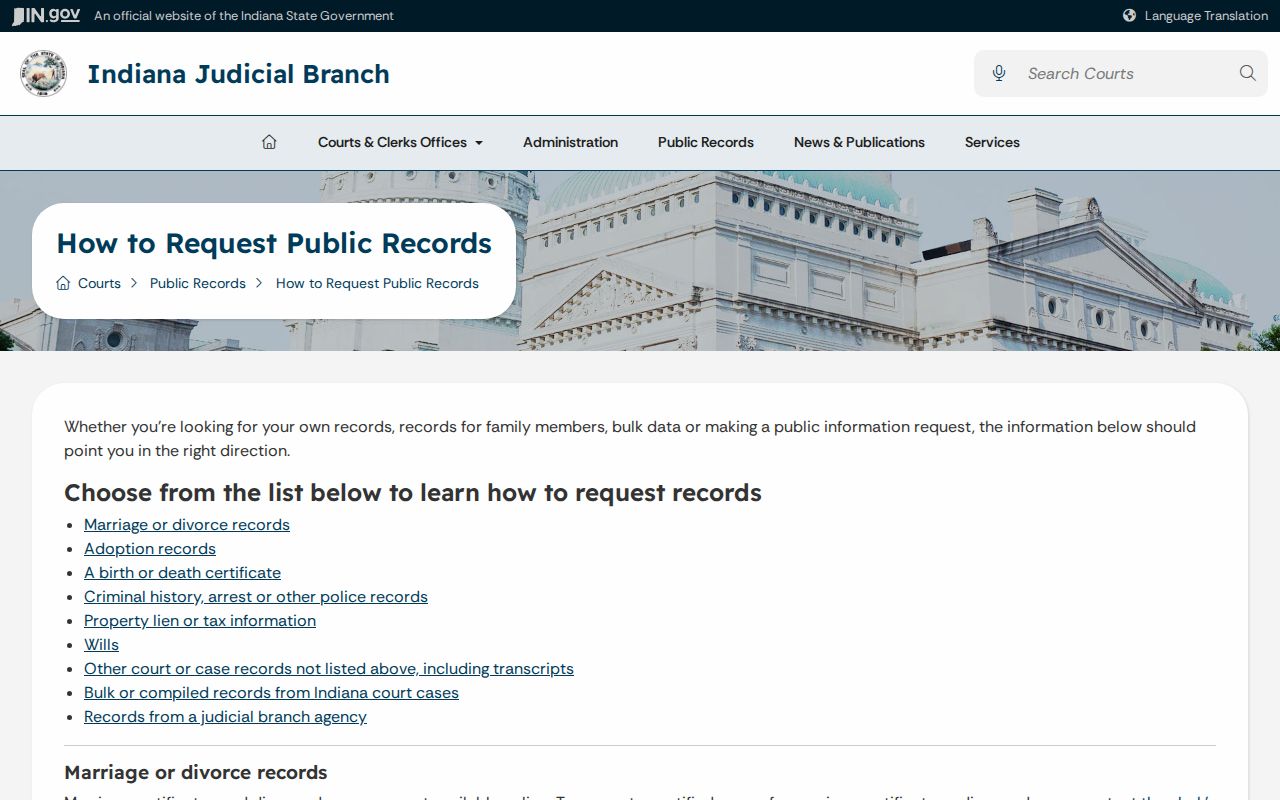
The statewide request guidance helps you pick the right office. For any trial-court file in Indiana, the county clerk and local court still set the practical method.
Indiana Court Record Layers
An Indiana search result may show only one layer of a case. Several record types sit beneath it. Indiana Trial Rule 77 tells each county clerk to keep the CCS, the case file, the Record of Judgments and Orders (RJO), and indexes. These apply to Indiana Circuit, Superior, and Probate cases. A transcript is separate; the court reporter prepares it. Name the record you want and why. The clerk or court can then route the request the right way.
- Chronological Case Summary
- The sequential list of events, filings, orders, and judgments in a trial case.
- Case file
- The underlying pleadings, motions, service papers, exhibits on file, and orders.
- RJO
- The separate Record of Judgments and Orders kept with the county court records.
- Certified copy
- A copy authenticated by the clerk for formal use; a screen print is not the same record.
- Transcript
- A written account of a hearing or trial prepared by its court reporter.
An Indiana trial CCS stays with the county record holder even if the case later goes to appeal. The appellate case gets its own docket and its own custodian. These terms matter. They separate a case-history question from a request for the original paper. They also separate it from a request for a certified Indiana judgment. Indiana Trial Rule 77 describes the clerk's CCS and case-record duties.
Note: Indiana county clerks maintain the CCS, case file, RJO, and indexes for county Circuit, Superior, and Probate records. City and town courts may have separate clerks.
Types of Indiana Court Records
An Indiana court file holds both the short event history and the papers behind it. The CCS lists what happened. The pleadings, motions, orders, judgments, and other filings make up the rest of the case record. Clerks also maintain indexes and the RJO. A public MyCase screen may link only selected images. Availability depends on case type, document, audience, and the age of the record.
Other requests belong to a specific custodian. A hearing transcript goes to the assigned court reporter. Appellate CCS entries and appellate papers go to the Indiana Appellate Clerk. City or Town court files can rest with the local court clerk. The Office of Judicial Administration keeps only its own records, reached through its separate online public-record request page. It holds no county case files. Name the exact item and the court. That narrows the docket search. It also keeps a copy request from landing at an office without the source record.
When Indiana Has No MyCase PDF
A MyCase result can show a CCS with no link to the paper you need. Indiana's public document matrix sorts online and in-person availability by case type and user role. Some categories give the public only a CCS or selected orders. Party and attorney sign-in can unlock eligible additional access. It does not open every sealed or confidential file. A missing PDF can reflect the matrix, an older record, or an image that was never posted. It does not prove the filing never existed. The official MyCase document-availability matrix is the right check before you request a copy.
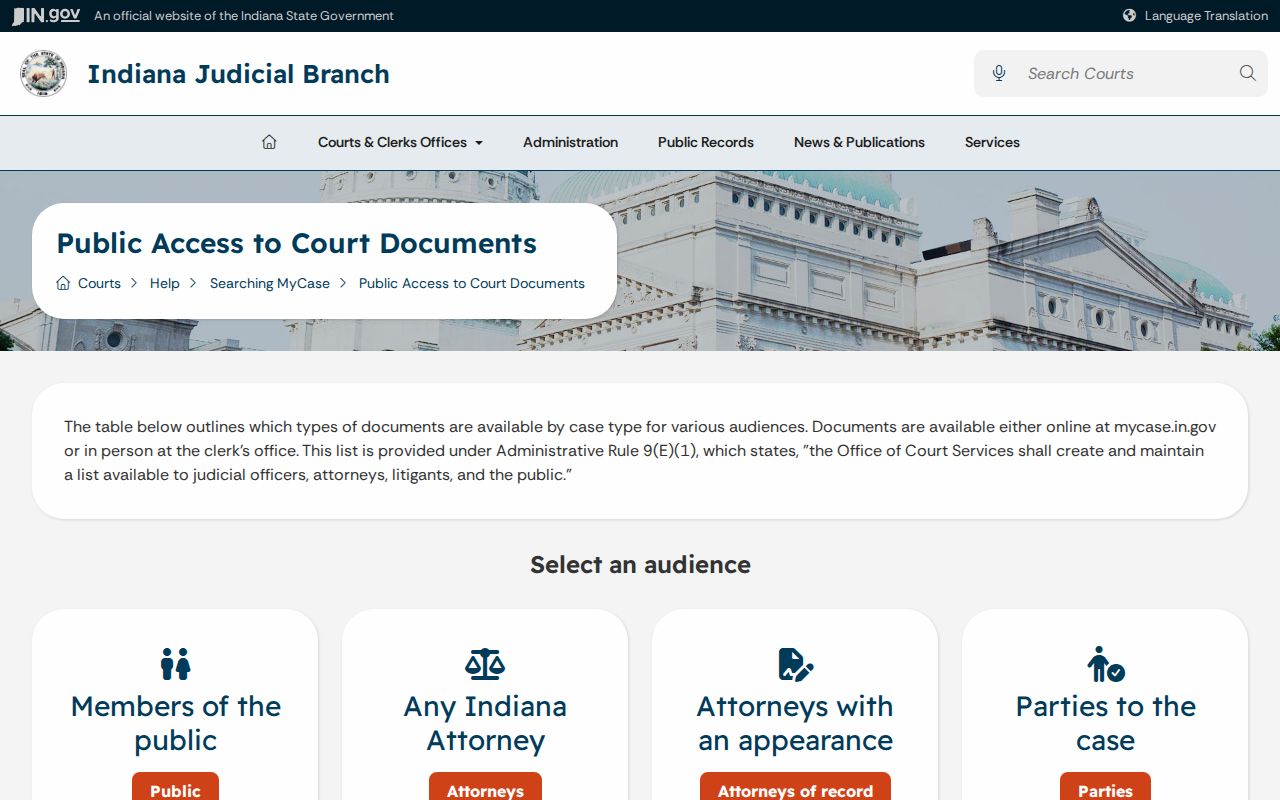
After the availability matrix, ask the county clerk or local court whether the document is public and how to inspect or copy it. For an Indiana appellate paper, contact the Appellate Clerk. For a transcript, ask the court reporter.
Note: In Indiana, a party may need a Courts account and access code to link an eligible MyCase case; sign-in does not open confidential records.
Inside an Indiana Court Record
An Indiana trial-court record can tell you a lot. Case identity, parties, filings, and rulings all may appear, though with varying depth. Treat the Indiana CCS as the event sequence rather than the whole file. When you request a file, ask for a specific pleading. Or ask for a signed order, service return, or final judgment. A blanket request for the "docket" may get you less than you want.
Case numbers follow their own grammar under Administrative Rule 8. Each part points to a county or court. It also shows the filing year and month, the case type, and the sequence number. The sample here shows that pattern from the rule itself, not any individual case.
| Indiana Case Number | 55C01-1101-CF-000123 illustrates an Indiana county or court, year/month, case type, and sequence. |
|---|---|
| Indiana Case Caption | The case style names the parties and identifies their roles in the matter. |
| Indiana CCS Entries | Dated descriptions of filings, orders, rulings, and other Indiana judicial events. |
| Pleadings and Motions | The filed papers that present claims, responses, or requests for a court order. |
| Orders and Judgment | The court’s signed directions and final determination, when issued. |
| Public Receivables | Fees, costs, balances, credits, and payments recorded on the case. |
Expect gaps in any Indiana court record. Some entries are redacted or withheld outright. Plenty of CCS lines carry no attached image at all. A transferred case adds another wrinkle. The court identifier or case number can change. MyCase still keeps the searchable history, so if an online entry leaves you short, request the exact event or document and ask the clerk directly.
Older Indiana Court Records May Be Offline
Indiana Trial Rule 77 lets courts keep records on paper, microfilm, or electronically. That flexibility explains a lot. The statewide Odyssey system has no guaranteed historical start date for every court, so a MyCase search may pull in some converted legacy events while older material and document images vary by court and by period. When a docket result stops early, local conversion or retention history is often the reason. It is not the true length of the paper file.
For an older Indiana case, contact the county clerk. Bring the cause number if you have it. Add party names, the rough filing period, and the document you want. The clerk can tell you whether the file sits in electronic form, on microfilm, or in paper storage. The office can also explain what retrieval steps apply. A courthouse counter visit or a phone call often beats repeating a broad online search when the public index simply does not reach that far back. There is no statewide lookback promise, and no uniform archive fee exists.
Indiana Certified Copies and Fees
A certified copy has to come from the local clerk or court. That office holds the original Indiana record. Statewide Indiana sources list a statutory copy ceiling plus a certificate fee, but a county's posted schedule may be lower or structured differently. Ask for the total before you pay. Page count, certification, retrieval, and delivery method can all change the amount. One caution: an Indiana MyCase printout is public information. It is not a substitute for a copy authenticated under the clerk's seal.
| Copy or Service | Verified Fee Basis | What to Confirm |
|---|---|---|
| Plain copy | Up to $1 per page; a county may adopt a lower schedule | Current local page rate and any delivery or retrieval charge |
| Certificate under seal | $1 in statewide fee references | Whether the clerk’s current total differs for the requested record |
| MyCase public search | No remote-access fee absent a specific authorized charge | Document links and special service terms may vary |
| Clerk search or archive retrieval | No single statewide amount located | Local search, archive, and delivery costs |
| Hearing transcript | No uniform statewide reporter rate | Reporter’s rate, format, and completion estimate |
Fees are a place where counties part ways. The Indiana clerk-fee statutes and the statewide fee references set a baseline. Allen County's own copy instructions, though, quote $1 per page and $3 per certified document. That per-certificate amount does not match the statewide reference. Read it as one clerk's published quote. It is not a rule for all of Indiana. Confirm the current total with the office holding the record before you send money.
Want a live example of a county request route? The Allen County copy-request page walks through one county's online process.
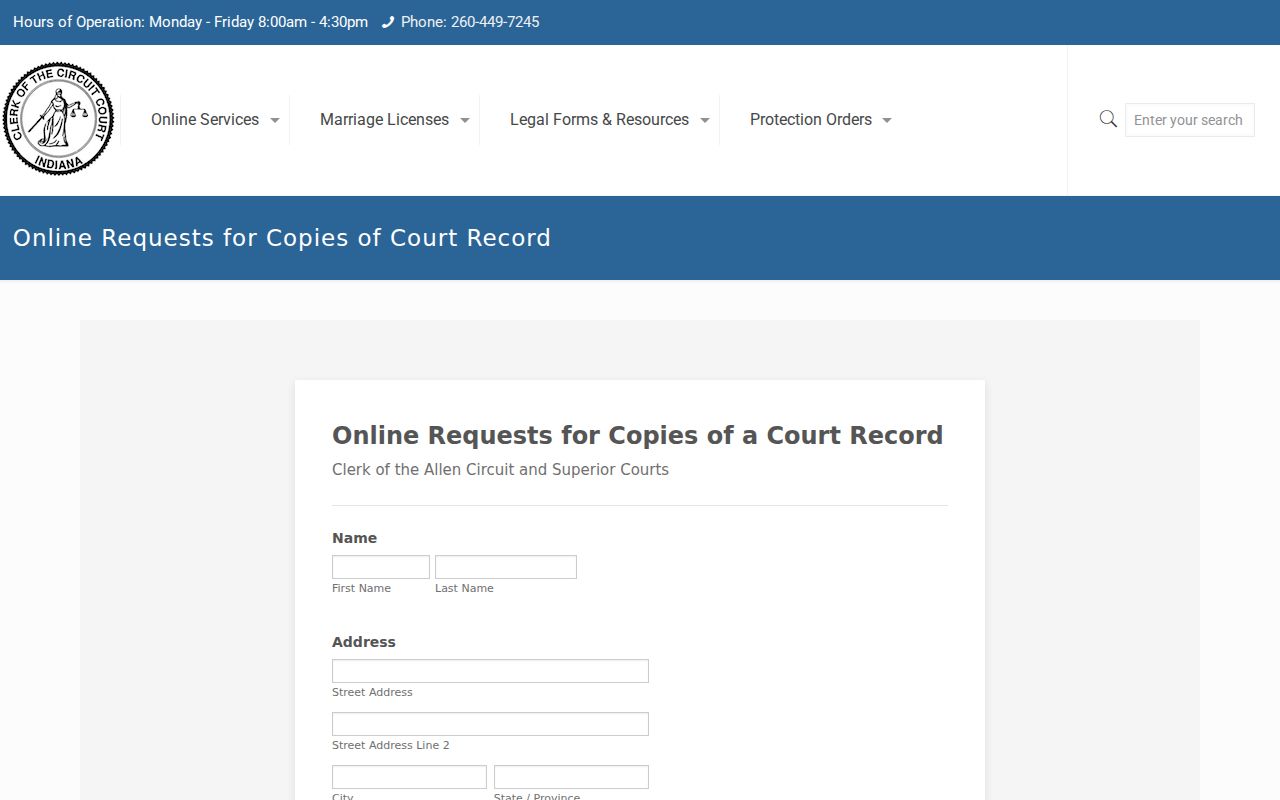
Think of the linked form as one county clerk's paperwork. It is not a statewide template. Indiana has no single application or fee schedule that every court uses. One clerk may want details another never asks for. Submission methods differ too: walk-in, mail, or an online portal, depending on the office.
Note: Indiana's statewide fee references set the statutory baseline for copies and certificates. Local charges cover pulling a file from archives or mailing it out. Each clerk quotes those separately.
Indiana Court Records Start Public
Indiana’s access rules begin with a general presumption that court records are open, subject to specific exclusions. Public access may be remote or at an Indiana courthouse, but a record that is legally public is not necessarily posted as a downloadable MyCase document. If an Indiana court document is not online, ask the custodian whether it can be inspected or copied through a local channel. Indiana Administrative Rule 9 uses a reasonable response period for court-record requests; it does not create one statewide delivery promise for every county file.
The Indiana Access Rule 4 states the general public-access presumption.
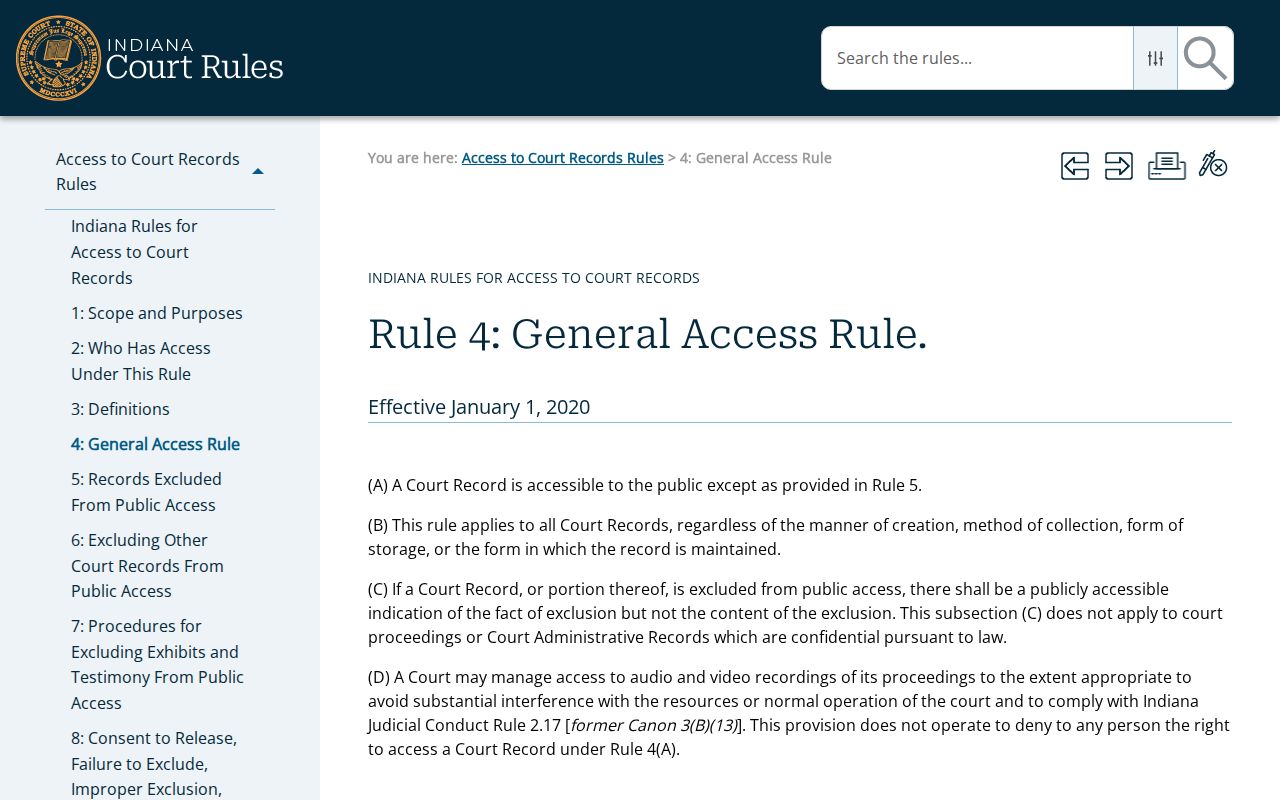
Even open access has edges. A record's category, plus any court order in force, controls what an Indiana clerk can release. If a docket entry shows a document was withheld, that entry reveals nothing about the contents behind it.
Indiana Appellate and Federal Records
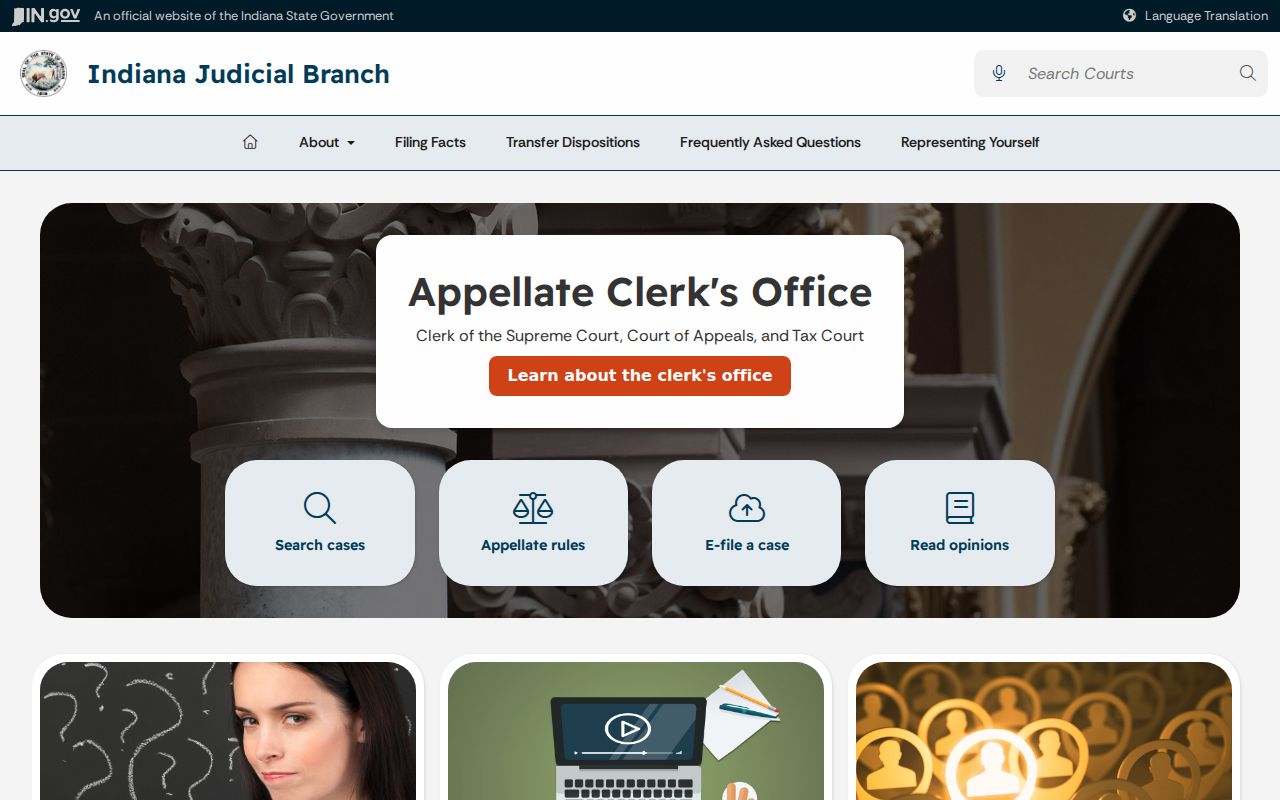
County clerks do not hold everything. An Indiana appeal generates its own appellate CCS. The trial court keeps the original case file. Records from the Indiana Supreme Court, the Court of Appeals, and the Tax Court share one route. They flow through the Appellate Clerk's record process. Want a transcript? That still comes from the court reporter who produced it. Before ordering a certified copy, settle two things: which record you need and which court level holds it.
The official Indiana Appellate Clerk page lays out appellate records and how to request copies.
Federal litigation in Indiana does not run through MyCase. Cases from the Northern District or the Southern District sit in federal systems instead. The PACER search and account page is where those federal dockets live, and it lets you set up the account you need to pull filings.
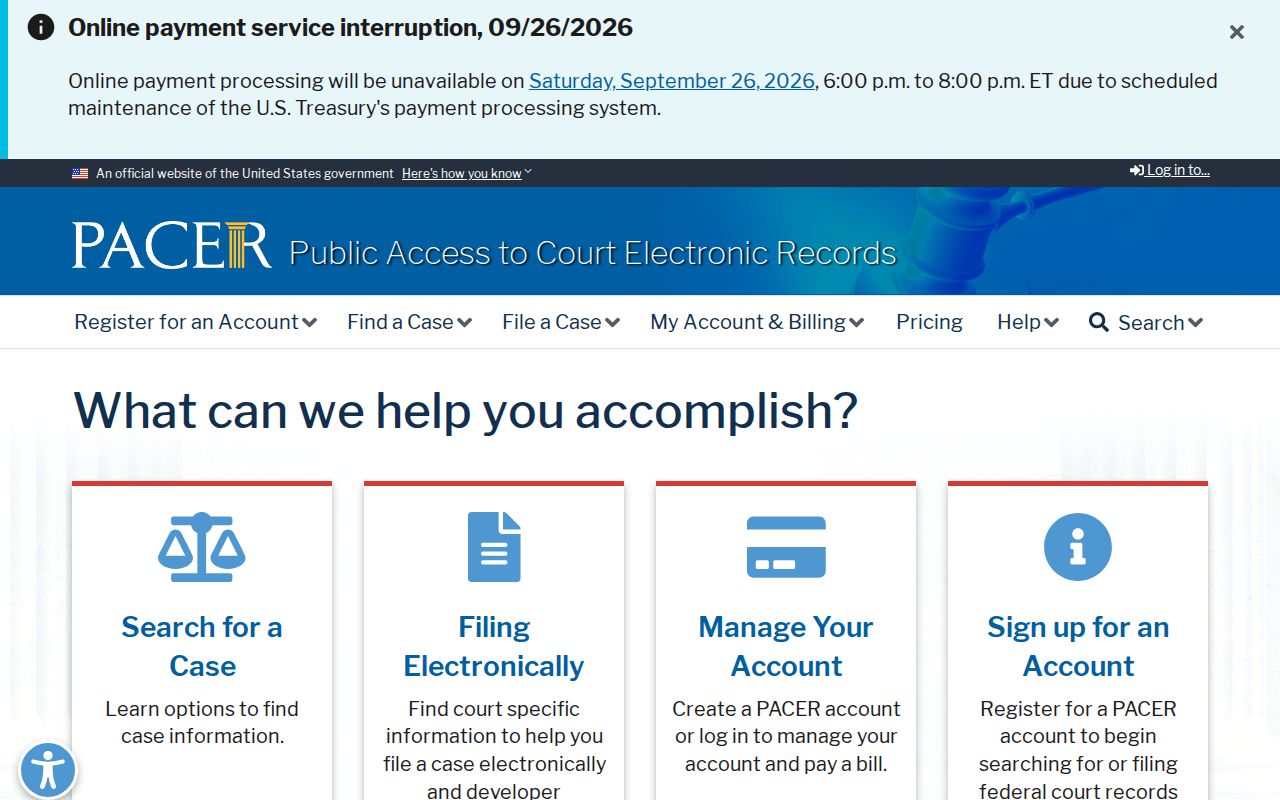
A federal docket and an Indiana trial-court CCS are two different records, each kept by the court that heard the case. So the search system you use depends on which court issued the filing.
Sealed Court Records in Indiana
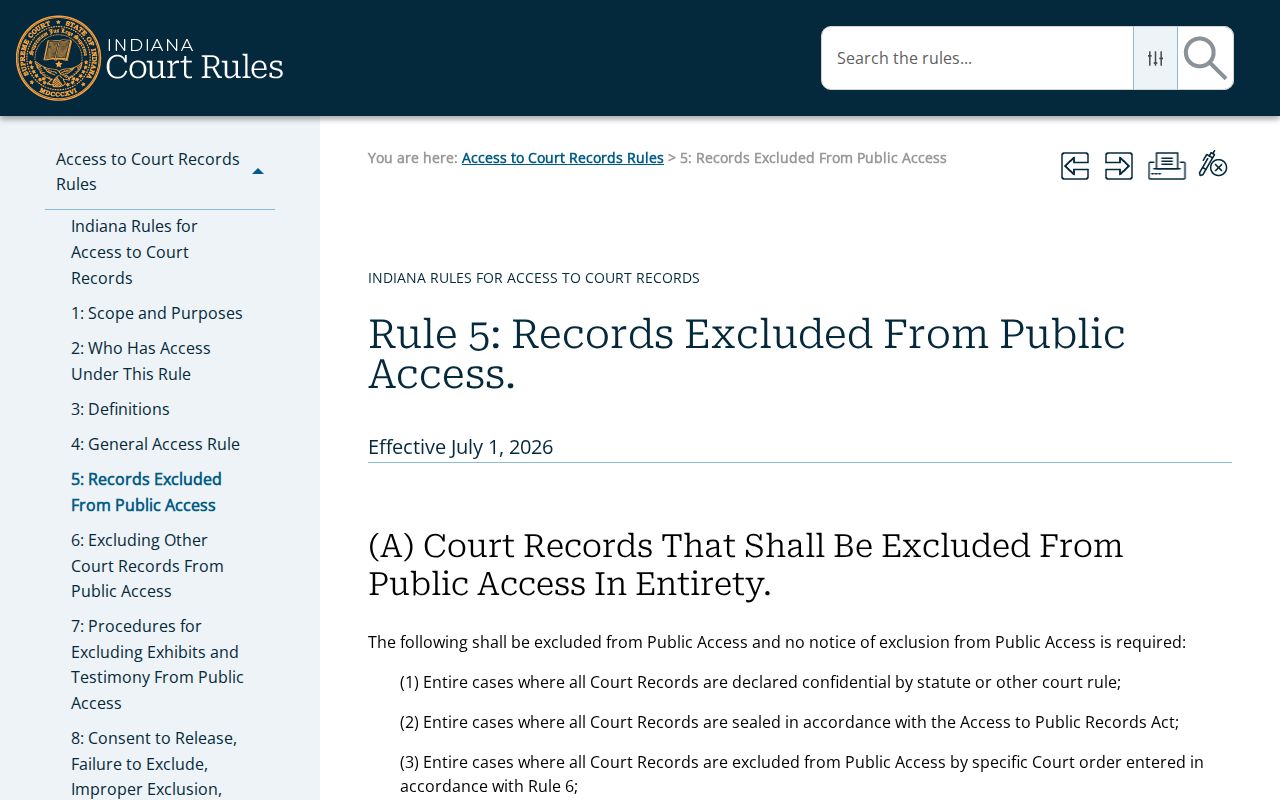
Not every Indiana court record is open. Indiana Access Rule 5 keeps whole categories out of public view. Excluded items include certain juvenile and mental-health cases. Personal identifiers and other listed material are kept back too. A case that is public overall can still hold one excluded filing. When that happens, the CCS may note that something was withheld. None of its contents will show. If an entire case is sealed or confidential, it may not show up in a public docket search at all. Expungement works differently: access changes according to the statutory route and the order entered. A missing MyCase result proves nothing by itself.
There is a process for more. Indiana Access Rule 6 lets an affected person ask a court to restrict access. The request must be verified, written, and supported by required findings. The court then weighs whether the narrowest practical scope and duration are justified. Getting at a record already excluded is also a judicial question. No clerk can simply grant that on request.
The full list appears in the Indiana Access Rule 5. It spells out confidential whole-case and record categories.
If a file is beyond reach, ask the clerk a direct question. Is the limit coming from a rule, a statute, or a court order? The answer tells you which access procedure applies.
Key Rules:
Access Rule 4 - Court records are generally public unless an exclusion or valid restriction applies.
Access Rule 5 - Lists whole-case and document categories excluded from public access.
Access Rule 6 - Provides a court process for a requested access restriction.
Indiana Access to Public Records Act, IC 5-14-3 - Recognizes the Supreme Court’s rulemaking authority over court-record access.
Note: Indiana Access Rule 6 allows an affected person to seek a restriction by verified written request with findings. A court decides it, not the clerk.